

Dash 8-400AT airtankers have already flown several missions since introduction earlier this month
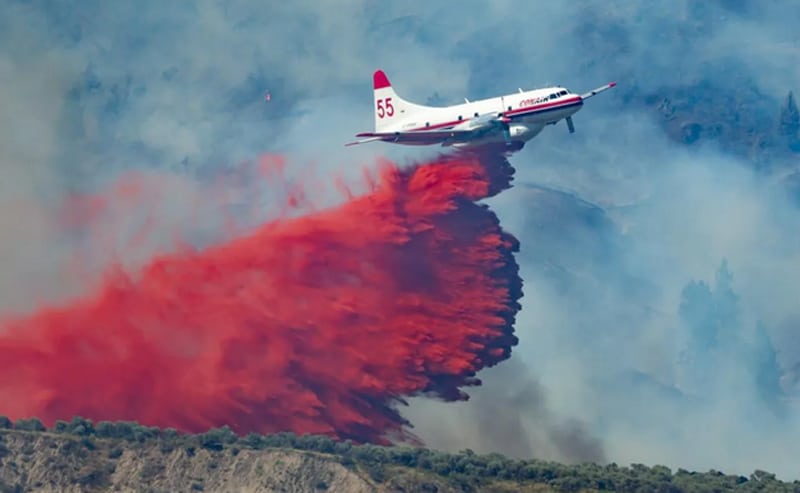
Greg Adams anticipates a long and busy wildfire season in British Columbia this year, so it’s timely that two new firefighting planes have just come into service. Adams has dedicated nearly three decades of his life to the B.C. Wildfire Service (BCWS) and has been an air technician for 10 of those years, responsible for devising strategies for dispatching planes to combat wildfires. Prior to that, he served as a firefighting pilot, known as an “air attack officer,” flying airtankers — fixed-wing aircraft that have been repurposed from retired commercial airliners to help douse wildfires.
Earlier this month, the BCWS welcomed two Dash 8-400AT airtankers to the provincial airtanker centre at Penticton Regional Airport, and they’ve already been deployed across the Okanagan region and beyond. The two new airtankers are equipped with a 10,000-litre tank, a good deal larger than the 8,000-litre tank on the Conair Convair airtankers that were retired last September. They have already completed firefighting missions near Peachland and Harrison Lake, Adams said, after wildfire season got off to an early, more active start. “We’ve only been on for just a little over a week, and we’ve flown six or seven missions, maybe eight or nine missions,” he said.
The BCWS operates 15 provincial airtanker centres throughout the province, with nine of them functioning only during the summer months. These centres reload firefighting aircraft and co-ordinate their deployment.
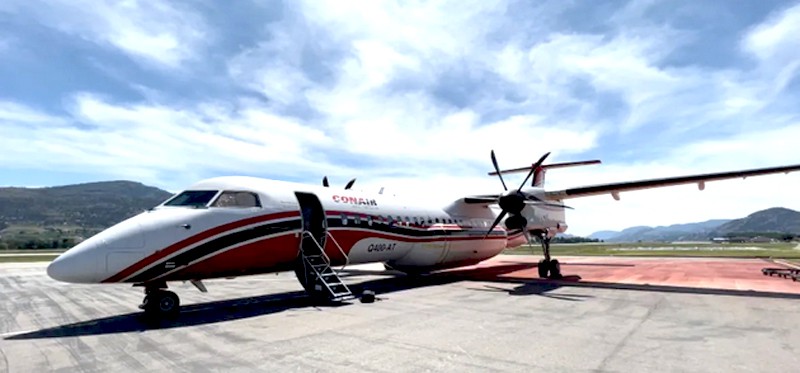
Photo: Dana Kelly/CBC
In total, the service operates a fleet of 20 airtankers and eight “bird dogs” — planes that lead airtankers to attack wildfires. It also employs helicopters and water-skimmers, so named due to their ability to refill their tanks from bodies of water while in flight. Air response allows fires to be tackled promptly and offers important support to ground crews, Adams said.
“We can get to the fires quickly and attack them when they’re small,” he said. “Once the fires get big, we’ll support the ground crews as best as we can on objectives that hopefully end up being successful.”
Shawn Byrne, a bird dog pilot based at the Penticton airtanker centre, says BCWS operations prioritize safety and effectiveness. Byrne, who’s been working as a bird dog pilot for five years, says the work can be challenging and acknowledges the significant impact wildfires can have on mental health — for those affected by the fires and those who fight them. But he remains passionate about his job.
“I love flying,” he said. “I believe in looking after people and I enjoy helping others.”
(Source: CBC News BC)