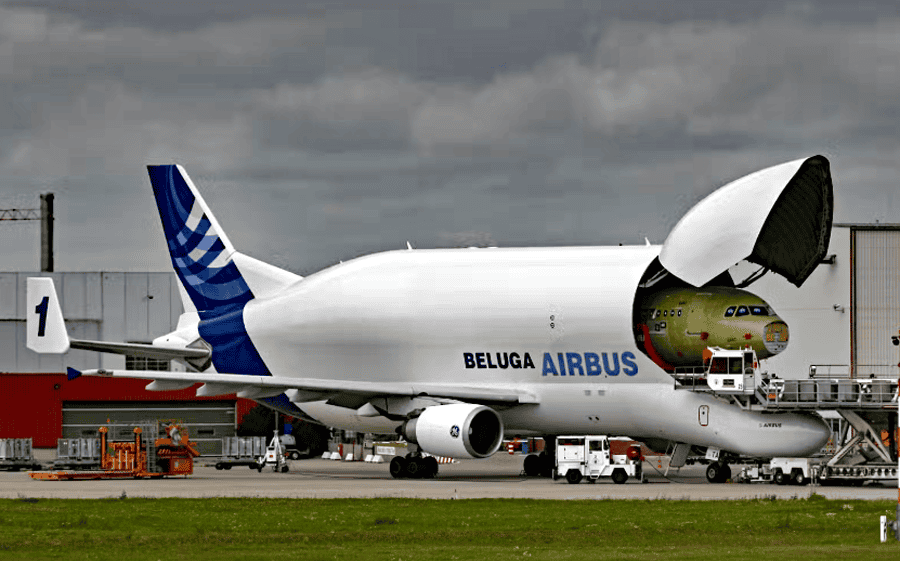


This event is set to mark around 30 years of BelugaST service moving Airbus components between European plants and final assembly lines. With six BelugaXLs now handling the heavy lifting, Airbus is starting to retire the original fleet and looking to preserve the aircraft on static display. For Airbus and spotters alike, it is the end of an era for #5, although elsewhere, two BelugaST jets will remain operational until mid-2027.
A Final Farewell For A Famous Freighter
The Airbus A300-600ST, the formal name for the BelugaST, leaves behind a storied legacy. The Airbus A300-600ST first took to the skies in 1994 and entered operational service in 1996 as Airbus’s in-house bridge between scattered factories. As production volumes and component sizes continued to grow, especially for the landmark Airbus A350 program, Airbus developed the A330-based BelugaXL, which began operations in 2020 and delivers around 30% additional payload.
In parallel, Airbus tried to commercialize space capacity through Airbus Beluga Transport, but the venture was terminated in early 2025, and Airbus A300-600ST flights were suspended. Airbus completed the BelugaXL fleet in June 2024, with operations expected to continue for decades.
A Major Moment For Airbus
For Airbus, retiring the BelugaST is less about nostalgia than it is about logistics and math. The company’s manufacturing footprint is scattered across Europe, so ensuring the existence of an internal airbridge is production-critical. Any delay in moving wings or fuselage sections can rapidly ripple into final assembly. The BelugaXL fleet, now complete, boosts payload by roughly 30% and can haul bigger Airbus A350 structures, reducing the number of flights needed and tightening turnaround times.
This does free up Airbus to focus on its core task of keeping assembly lines on schedule. BelugaXL models are extremely efficient, and they will certainly serve for decades, according to the Liverpool Echo. Airbus has stored tooling in case it decides to build more BelugaXL aircraft. The company’s decision to put the plane on display allows it to preserve goodwill and celebrate a unique cultural icon.
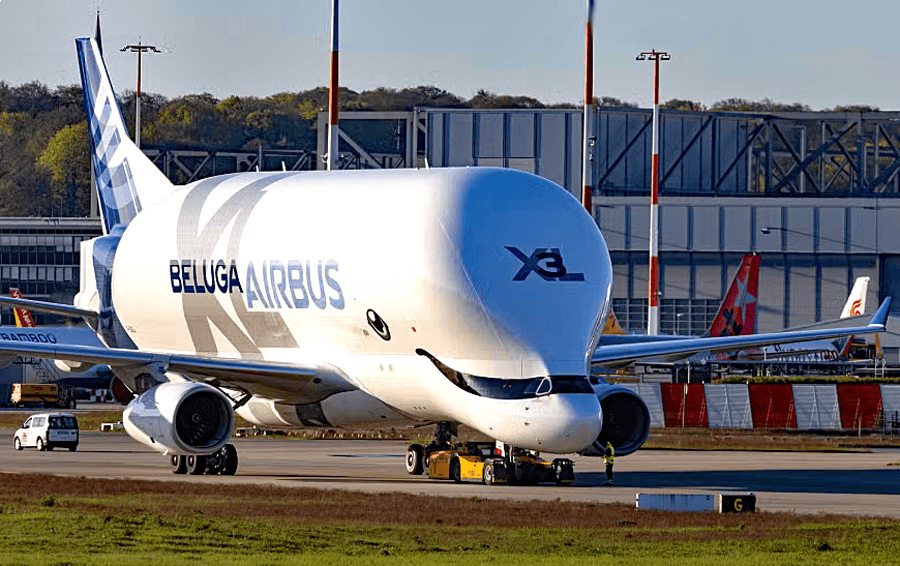
What Does The Future Hold For The Airbus Beluga Program?
It has kept key production tools in storage in case it chooses to build more of these custom freighters, which could be essential if it chooses to produce more aircraft. What is less clear is whether Airbus will ever take another run at selling outsized cargo capacity to external customers. Its experiment with BelugaST chargers proved how hard it is to compete when range, weight limits, and loading complexity matter.
One Last Landing
Beluga #5’s final UK flight took off from Bordeaux this morning at 10:16 am, with the bulbous outsize freighter flying north towards La Rochelle before turning northwest towards Nantes. It held this course until it was over the English Channel and beyond the islands of Jersey and Guernsey, before adjusting to a more direct northerly heading off the south coast of Devon. It cruised at a height of 32,000 feet.
(Source: Simple Flying, Alexander MitchellJake Hardiman. Photos/Shutterstock)